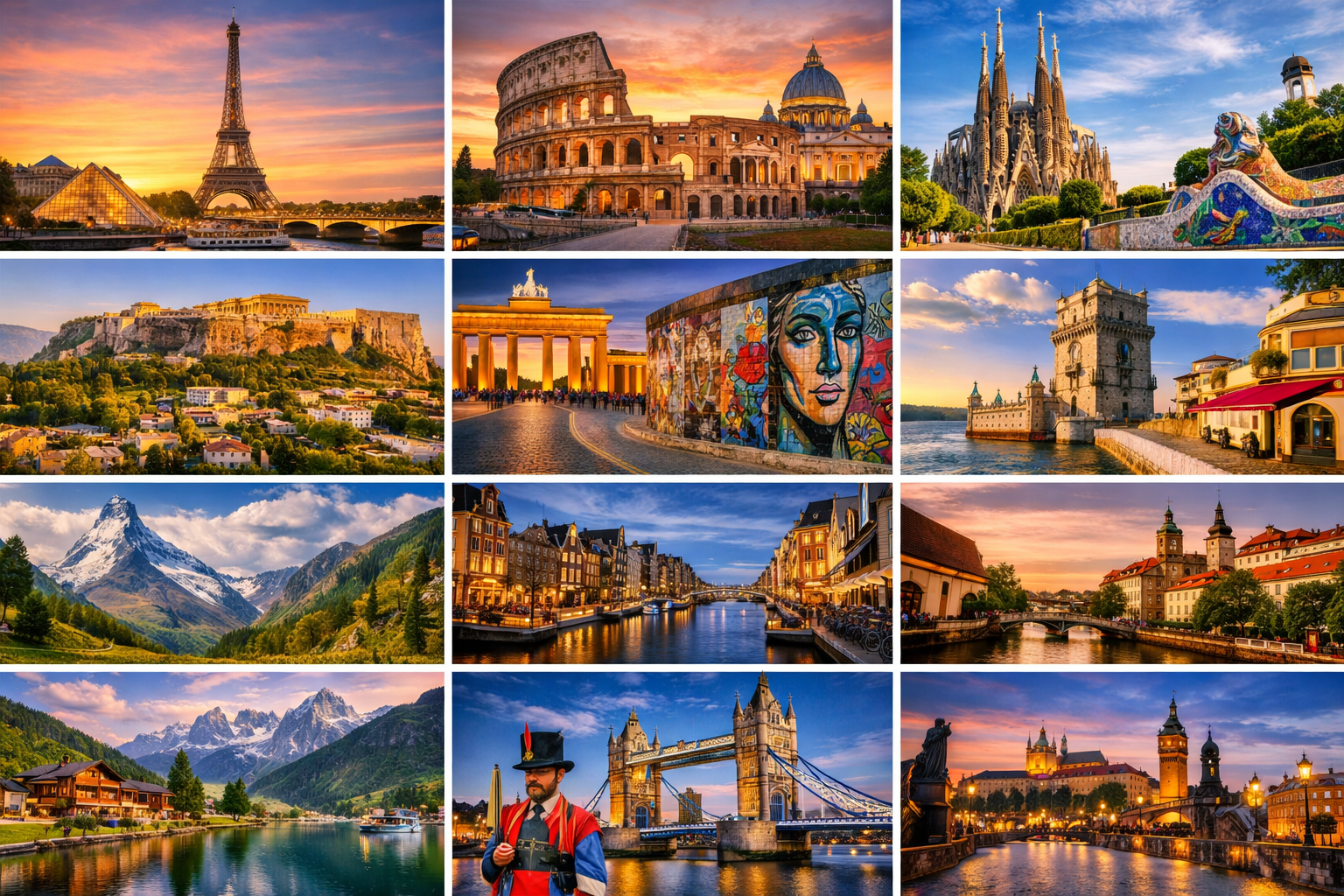
Europe stands as the world’s leading tourist destination, welcoming more than half of all international arrivals each year. Its success lies in a unique blend of historical richness, cultural diversity, varied geography, and modern infrastructure that makes travel seamless and rewarding.
Historically, Europe is the cradle of civilizations, philosophies, and artistic movements. Iconic landmarks such as the Eiffel Tower in Paris, the Colosseum in Rome, and the Acropolis in Athens testify to this heritage. Each country offers a distinct cultural identity, from Mediterranean traditions to Nordic influences, attracting millions of visitors eager for authenticity.
The diversity of landscapes is another major strength. Norway’s fjords, Spain’s beaches, Switzerland’s Alps, and England’s countryside provide endless experiences. This variety caters to every type of traveler — nature lovers, history enthusiasts, food connoisseurs, and urban explorers alike.
Economically, tourism is a cornerstone of the European Union, generating hundreds of billions of euros and millions of jobs. It fuels growth, strengthens social cohesion, and fosters cultural exchange. Yet, Europe faces modern challenges such as overtourism, environmental sustainability, and adapting to evolving traveler expectations.
In conclusion, Europe remains an essential destination, symbolizing a balance between heritage and innovation. It embodies the idea of travel that enriches both mind and heart, continuing to captivate with its authenticity and ability to reinvent itself.

 admin
May 12, 2026
admin
May 12, 2026